Data Science


Start from the ground up — Python syntax, data types, control flow, functions, and object-oriented programming. Learn how to set up a professional data science environment using Anaconda, Jupyter Notebooks, and VS Code, with version control via Git and GitHub.
Build the mathematical intuition behind data science. Learn descriptive statistics, probability distributions, hypothesis testing, confidence intervals, and A/B testing — with Python-based exercises on real datasets.
Master the core Python data libraries. Use NumPy for array operations and linear algebra, and Pandas for data cleaning, transformation, aggregation, and merging. Learn to handle missing data, outliers, and messy real-world datasets efficiently.
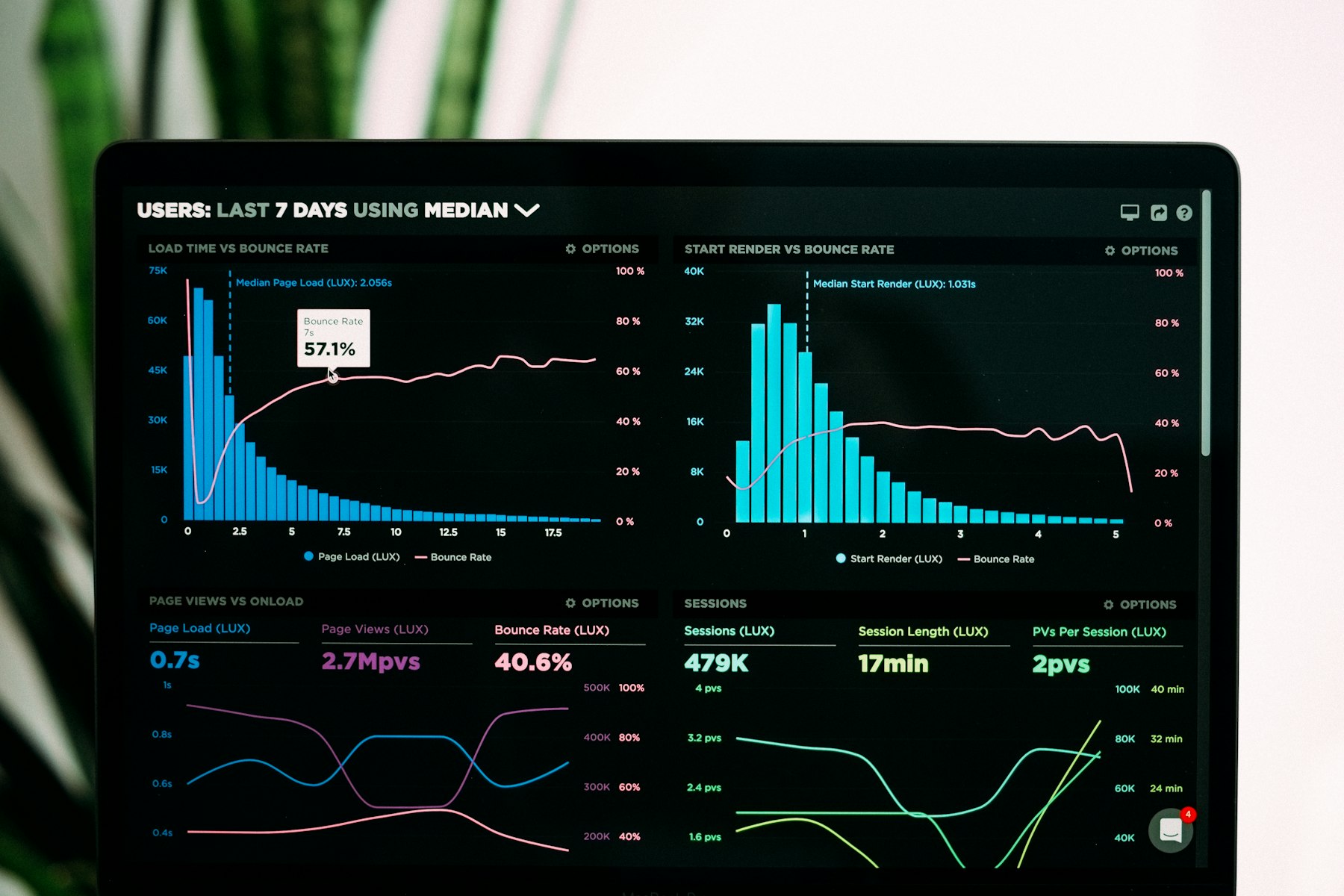
Tell stories with data using Python visualisation libraries. Create static charts with Matplotlib and Seaborn, and build interactive dashboards with Plotly. Learn chart selection, design principles, and how to communicate findings clearly to non-technical stakeholders.
Query, aggregate, and analyse data from relational databases using SQL. Learn joins, subqueries, window functions, CTEs, and performance optimisation. Practice on MySQL and PostgreSQL with real business datasets including e-commerce and finance data.
Build your first ML models using Scikit-learn. Cover the complete ML pipeline: data preprocessing, feature engineering, model training, cross-validation, and performance evaluation. Work on regression, classification, and clustering problems with real datasets.
Go deeper with XGBoost, LightGBM, Random Forests, and Gradient Boosting. Learn advanced feature engineering, hyperparameter tuning with Optuna, SHAP values for model explainability, and handling class imbalance in production datasets.
Build neural networks from scratch using TensorFlow and Keras. Understand backpropagation, activation functions, regularisation, and optimisers. Build CNNs for image classification and RNNs/LSTMs for time series forecasting.
Process and analyse text data using NLTK, SpaCy, and Hugging Face Transformers. Build sentiment analysis, text classification, and named entity recognition models. Get introduced to large language models (LLMs) and prompt engineering for data workflows.
Build professional business dashboards with Microsoft Power BI. Learn data modelling, DAX formulas, Power Query transformations, and report publishing. Create interactive executive dashboards that communicate KPIs and business insights clearly.
Take your models from Jupyter Notebook to production. Build REST APIs for your ML models using Flask and FastAPI, create interactive web apps with Streamlit, containerise them with Docker, and deploy to AWS EC2 or Streamlit Cloud.
Learn to manage the full ML lifecycle like a professional. Use MLflow for experiment tracking and model registry, build automated training pipelines with Apache Airflow, monitor model drift in production, and implement CI/CD for ML using GitHub Actions.
Process large datasets using Apache Spark via PySpark. Learn distributed data processing, Spark DataFrames, SparkSQL, and working with AWS S3 and Google BigQuery. Understand the modern data stack used at scale in enterprise organisations.
Prepare for data science interviews at top companies. Cover SQL interview questions, ML concept questions, case study frameworks, statistics puzzles, Python coding rounds, and take-home assignments — with mock interview sessions included in the Professional plan.
Explore the frontier of AI. Learn prompt engineering, RAG (Retrieval Augmented Generation) pipelines with LangChain, fine-tuning open-source LLMs, and building AI-powered data apps — skills increasingly demanded by data teams in 2025 and beyond.
Build and deploy a complete end-to-end data science project — a real-world business problem with data ingestion, EDA, ML modelling, a deployed Streamlit dashboard, and a live URL. Instructors provide code reviews and help you present it as a portfolio piece for job applications.

















No prior experience is required. We start from Python basics and build up progressively through statistics, machine learning, and deployment. If you can use a computer and are willing to put in the effort, this course will take you all the way to deploying your own data science models in production.
Just a modern computer (Windows, Mac, or Linux) with internet access. We guide you through installing Anaconda, Jupyter Notebook, VS Code, Power BI Desktop, and all required Python libraries in the first module. No paid software is required — all core tools are free and open source.
Yes. Professional plan students receive resume reviews, LinkedIn profile optimisation, mock interview sessions (including SQL, ML concept rounds, and case studies), and referrals to our network of 120+ hiring partner companies including analytics firms, product startups, and data-first companies across India.
We offer both formats:
Yes — we offer a full 14-day money-back guarantee, no questions asked. If you're not satisfied with the course quality, simply reach out within 14 days of purchase for a complete refund.